
Background
In June 2025, the Malaria Youth Champions Uganda (MYCU) in partnership with Uganda’s National Malaria Elimination Division (NMED) and with support from the African Leaders Malaria Alliance (ALMA) and the Global Fund, introduced community scorecards in two malaria high-burden districts in Uganda.
Bukedea was one of the districts selected, and a review of its quarter 1 2025 malaria scorecard revealed underperforming indicators at Nalugai Health Centre III, including:
- the health centre accounting for over 15% of the district’s malaria cases
- 83% of outpatient visits were attributable to malaria
- a test positivity rate of 77% (the highest in the district and above the national rate of 35.9%).
Furthermore, malaria in pregnancy indicators were concerningly poor, with:
- antenatal care (ANC) attendance low (37% at first visit, dropping to 6% by the fourth visit).
- the uptake of preventive treatment (IPTp) suboptimal, falling from 50% for the first two doses to 36% for the third dose.
These poor performing indicators led to the health centre’s selection for the introduction of the community scorecard as a strategic tool to identify and rectify systemic challenges.
About the community scorecard
The community scorecard is a participatory social accountability tool used to monitor and improve public healthservices. It brings service users (the community) and service providers together to identify challenges, co-create solutions and track progress.
A key focus of this initiative is to address gender-related barriers to healthcare access. Recognising that different groups often experience challenges differently, especially when it comes to gender and healthcare, community dialogues were organised into 4 separate groups:
- adolescent girls
- adolescent boys
- adult women
- adult men
This approach ensured distinct perspectives were captured, yielding the nuanced insights necessary to effectively identify and co-create solutions for gender-specific issues.
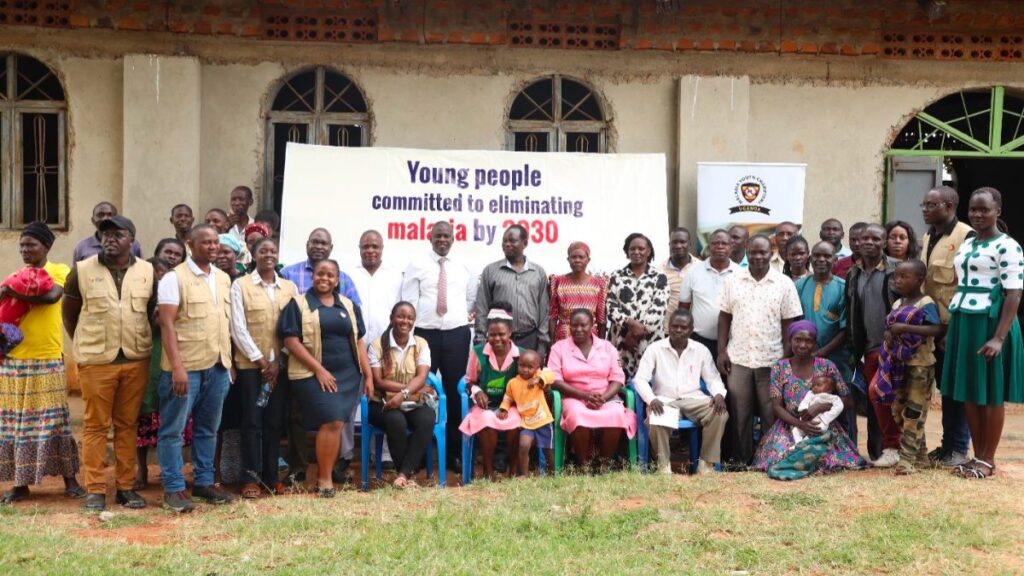
Adoption and use of the community scorecard
A group of 40 community members living within the facility’s catchment area were invited to participate in the community dialogues.
14 indicators were chosen and explored with the community to assess their experience with health care delivery at the facility. Youth facilitators from the national Malaria Youth Corps probed into each of the following indicators to initiate dialogue within the 4 groups:
- decision making
- home visits
- accessibility of healthcare services
- waiting times for the provision of healthcare services
- caring, respectful and compassionate care
- availability of gender-preferred healthcare services
- availability of healthcare services
- availability of medicines, diagnostic services and medical supplies
- ambulance management and services
- facility infrastructure
- cleanliness of the health facility
- safety and security of the health facility
- responsiveness to community health needs
Following the community dialogues, individual members voted on the health centre’s performance for each of these indicators, using a colour-coded scoring system which facilitated participation by literate and illiterate community members. The colour-coded uses:
- red to represent bad or poor indicator performance
- yellow to represent average indicator performance
- green to represent good indicator performance
Quarter 2, 2025 community scorecard feedback
Following the gender and age-specific dialogues, all groups participated in an interface meeting with community members, the health workers of the facility, and district health leaders.
During this meeting, community members shared the findings. Then, all participants jointly analysed the identified barriers and bottlenecks to healthcare services, the underlying causes as well as possible solutions. Subsequently, key actions were developed to address the identified gaps.
The community feedback in quarter 2 of 2025 revealed five major concerns:
- Long waiting times for the provision of health care services: Community members across all demographics reported prolonged waiting times. The primary bottlenecks identified included patient registration at the outpatients department, malaria testing at the laboratory and services at the immunisation unit.
- Perceptions of inequitable treatment and favouritism: Members of a specific ethnic group reported feeling that they were treated unfairly and received delayed services at the healthcare facility because of their tribal background.
The following concerns were raised only by women and adolescent girls:
- Safety and security issues at the health facility: Women and adolescent girls raised specific concerns about their safety at the facility due to a lack of security guards, particularly at night, overgrown bushes around the facility and no fencing. They shared that the
- Inadequate patient privacy: A critical lack of privacy in the maternity ward, including the absence of curtains and unauthorised individuals entering, compromises their dignity and therefore deterring them from facility-based deliveries.
- Infrastructure gaps: Concerns were raised about the shared toilet facilities for men and women which caused discomfort, compromised privacy, and discouraged facility use – particularly for women.
Action plans developed
Through constructive dialogue, the root causes of the community-identified gaps were established. For example,
- long waiting times were recognised as a result of understaffing at both the outpatient department and laboratory. The immunisation unit had no refrigerator for vaccines due to a lack of reliable electricity, necessitating transport from district offices on immunisation days.
- the community’s perception of discrimination, resulting in delayed services, was identified as stemming from a language barrier. Staff did not fluently speak the local language (Lugisu) of a specific community, creating a communication gap that required a translator before consultations.
- all privacy, safety and security concerns were acknowledged, with facility and district leadership making commitments to address them. For each issue, a specific action was assigned to a responsible person with a clear timeline, culminating in a comprehensive action plan to ensure implementation.
The action plans provided a clear framework for accountability and measurable improvement in subsequent community scorecard quarterly meetings.
Taking action and driving improvements
By the October 2025 follow-up, Nalugai Health Centre III had made significant progress on its action plan. Key improvements included:
- Staffing: A lab technician and a bilingual nurse were recruited, reducing waiting times and language barriers.
- Dignity and privacy: Curtains were installed, toilet signage was improved and access to the delivery room was restricted to ensure patient privacy.
- Safety: A night security guard was hired, bushes were cleared and a perimeter fence was budgeted for construction.
- Equipment: A new gas refrigerator was installed for reliable vaccine storage and an incomplete structure was designated for completion as a patient kitchen.
- Training: Staff and volunteers received refresher training on patient care and timeliness.
These actions directly addressed community concerns, leading to a more efficient, dignified and safe healthcare environment.
Community feedback
The quarter 3 2025 community scorecard demonstrated significant improvement in a number of the indicators including:
- waiting time
- safety and security of the health facility
- availability of required diagnostic services
- responsiveness to community health needs
These were based on results that were not just promises but concrete deliverables, including new staff and equipment, that could be easily verified by the community.
The process fostered a powerful cycle of accountability and collaboration. After the initial dialogue, follow-up actions proved to the community that their voice mattered. A community member, Akol Diana, confirmed, “These days we have curtains, so we feel more comfortable coming to the health centre to give birth.”
This transparency sparked a wave of shared responsibility. One community member, Munghara Moses, pledged 500 bricks to support the facility’s new kitchen, stating, “In today’s meeting the facility promised to set up a kitchen and, to support them, since our community will benefit as a whole, I would like to donate 500 bricks.
According to district health officer Dr Emmanuel Odeke Okallany, “An important outcome has been the drastic improvement in the relationship and level of trust between the community and health workers at the facility.”
This sentiment was echoed by Adupa Micheal, the in-charge of Nalugai Health Centre III, who attested to the direct impact:“Before the scorecard, we struggled with staffing, security, and had no vaccine fridge. After the dialogues, the district acted immediately, sending more staff and committing to a fence.”
These outcomes, from the pledged bricks to the district’s commitment to fund a perimeter fence, signal a crucial shift from short-term fixes to sustainable, rights-based service delivery, directly catalysed by the community scorecard process.
Conclusion
This Uganda community scorecard story demonstrates that structured community participation can drive meaningful change in local service delivery. Engaging community members directly has created a sense of ownership over the initiative, empowering them to opt for change, demand for better services and seek for accountability.
A critical insight was how gender-sensitive implementation revealed unique challenges faced by women, and highlighted the need for tailored, context-specific solutions. By creating a safe space for dialogue and joint problem-solving, the community scorecard empowered citizens, improved responsiveness, and led to a safer, more efficient, health facility providing more equitable services for everyone.